
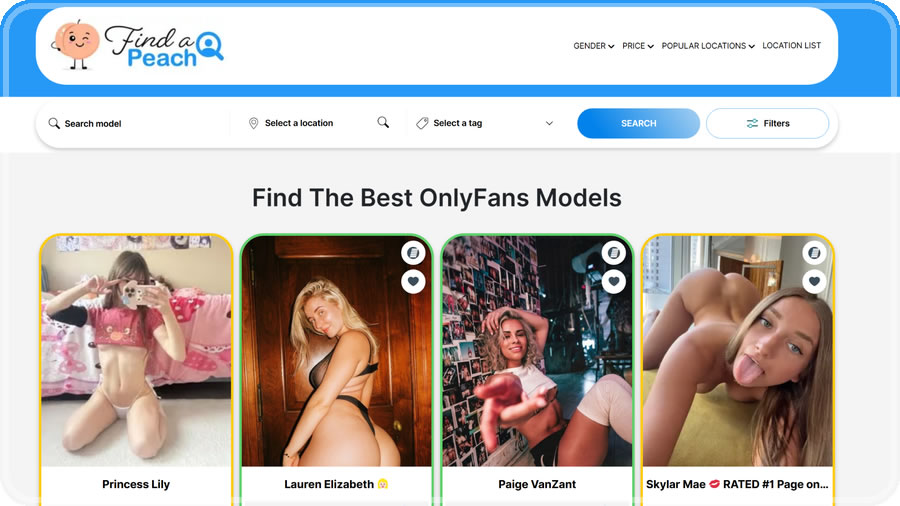
Three directories, all providing a similar service. Or are they? We look at the big three directories and check out their policies regarding search quality and privacy protection. And damn, if we did not turn up some pretty shocking results, with two sites happy to trick their users with dodgy results, and to secretly track their purchases. YIKES!
What matters when choosing an OnlyFans directory for search
1) Search accuracy and intent matching. When you search “models in Japan,” do you get people in Japan, or just people “popular with users in Japan”? Those are not the same query.
2) Filtering that actually helps. Good directories let you narrow quickly by category, tag, location, and price, without forcing you into clickbait pages.
3) Promotion transparency Promoted listings must be clearly labeled and separated. If featured profiles are blended into normal results, you are not searching; you are being sold to.
4) Privacy and tracking. All sites have basic server logs. But most fans don’t want others to know their purchase history. You’d think that would be a given right? Your right to privacy would by default be respected. Well, guess again, some of the major OnlyFans directories trample all over your right to purchase privacy.
Clarification on “tracking spending” Not all OnlyFans directories track spending. I mean, shit… It’s pretty shitty of those that do it… and without telling you? But yes, two of the sites listed on this list are tracking your every click, your every visit but also what you spend. Your privacy is simply not regarded or respected at all.
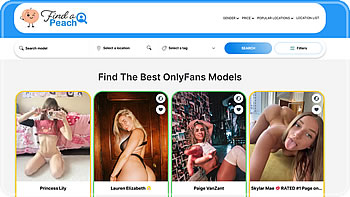
Winner: best for real search
Pros
- Promoted listings are obvious. You can tell what is sponsored without guessing.
- Search feels like search. The UI is built around filters and intent, not bait clicks.
- Cleaner result integrity. It is harder to “accidentally” click unrelated profiles.
- Privacy posture is calmer. It does not feel built around behavioral monetization.
Cons
- Like any site, it still has basics. Expect standard logs and likely basic analytics, but it does not feel tracking-first.
Bottom line
Findapeach wins because it respects the search contract. It keeps promotion clear, results usable, and the overall experience focused on finding what you asked for.
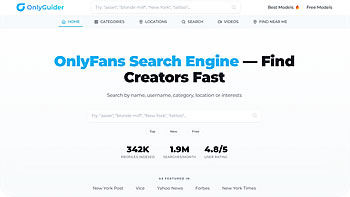
Biggest reach, weakest trust signals
Pros
- Huge SEO footprint. It ranks for a lot of queries and has an enormous surface area. Lost 90% of its traffic in February 2026, probably from this dodgy SEO footprint.
- Fast discovery for broad browsing. If you are not picky, it returns a lot quickly.
Cons
- Monetized discovery patterns. It is hard to trust “best” and “top” without strong disclosure. Their “best” page is just a page of “these models pay us the most for promotion.”
- Heavy tracking feel. It’s a super big brother experience; they are tracking your every move, who you visit, how much you spend, and with whom.
- Promotion can blur with results. Featured items are intentionally hidden within organic results meaning you when you search for one thing, you’ll often get another.
- Some dodgy practices seem to have been used in promotion. Dozens of sites hacked to publish hidden links to OnlyGuider. This happened right after they went live, so it’s hard to believe it was done by a competitor.. before they were even popular. More likely, it was part of an intentional black hat marketing strategy.
Bottom line
OnlyGuider is built to win Google, not to protect users. It is powerful for reach, but it does not feel privacy-respecting or fully transparent about what you are being shown.
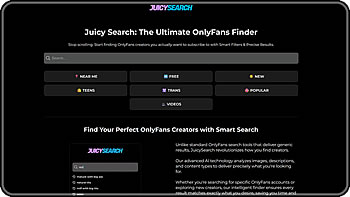
Looks slick, still incentive-driven
Pros
- Polished UI. It feels modern and easy to start using.
- Strong filter presentation. The site clearly wants to feel “smart” and searchable.
Cons
- Intent drift on location. “Popular in Japan” is not “in Japan,” and that difference matters for search.
- Featured blending risk. Sponsored listings are blended in with normal search. It’s done for profit, but reduces the search quality. Even Google marks its sponsored listings.
- Minimal privacy feel. You’ve got no privacy. They track who you follow, how much you spend with each model. It’s yuck.
- They are buying popularity. Buying links is very frowned on by Google… and Juicy clearly has had their pocketbook open.
Bottom line
JuicySearch is good at first glance, weaker under scrutiny. If you care about clean search intent and clear promotion disclosure, it does not beat Findapeach. In December 2025, traffic cratered, perhaps the result of their aggressive link buying.
The direct verdict
Best for searching with trust: Findapeach.com. Clear promotion labeling, strong intent-based browsing, and a noticeably less manipulative experience.
Biggest(for now, but plummeting) but hardest to trust: OnlyGuider.com. Massive reach, but results that are difficult to value due to hidden promoted results, and dodgy, site-hacking SEO tactics. Worst of all, they actively track your spending.
Slick UI, mixed integrity: JuicySearch.com. Good presentation, but the same incentive problems show up once you focus on intent matching and transparency. They actively track your spending.